Hospital endoscopy centers
Improves examination efficiency and QC management while reducing documentation burden.


Clinical applications
yoyolink is co-developed with renowned Class-A tertiary hospitals in China and validated through multicenter clinical studies with 1000+ cases. The product holds an NMPA medical device registration certificate; multicenter validation continues to accumulate real cases, and multiple Shanghai hospitals are deploying the system in clinical practice.
Early GI cancer screening is a key strategy for reducing the incidence and mortality of gastric and colorectal cancer. yoyolink highlights suspected lesions in real time, acting as a “second pair of eyes” for physicians and raising the detection rate of early-stage cancer and other lesions in primary-level hospitals.
AI auto-captures screenshots, records insertion/withdrawal times, generates report drafts and compiles QC statistics — cutting repetitive documentation for tertiary hospitals.
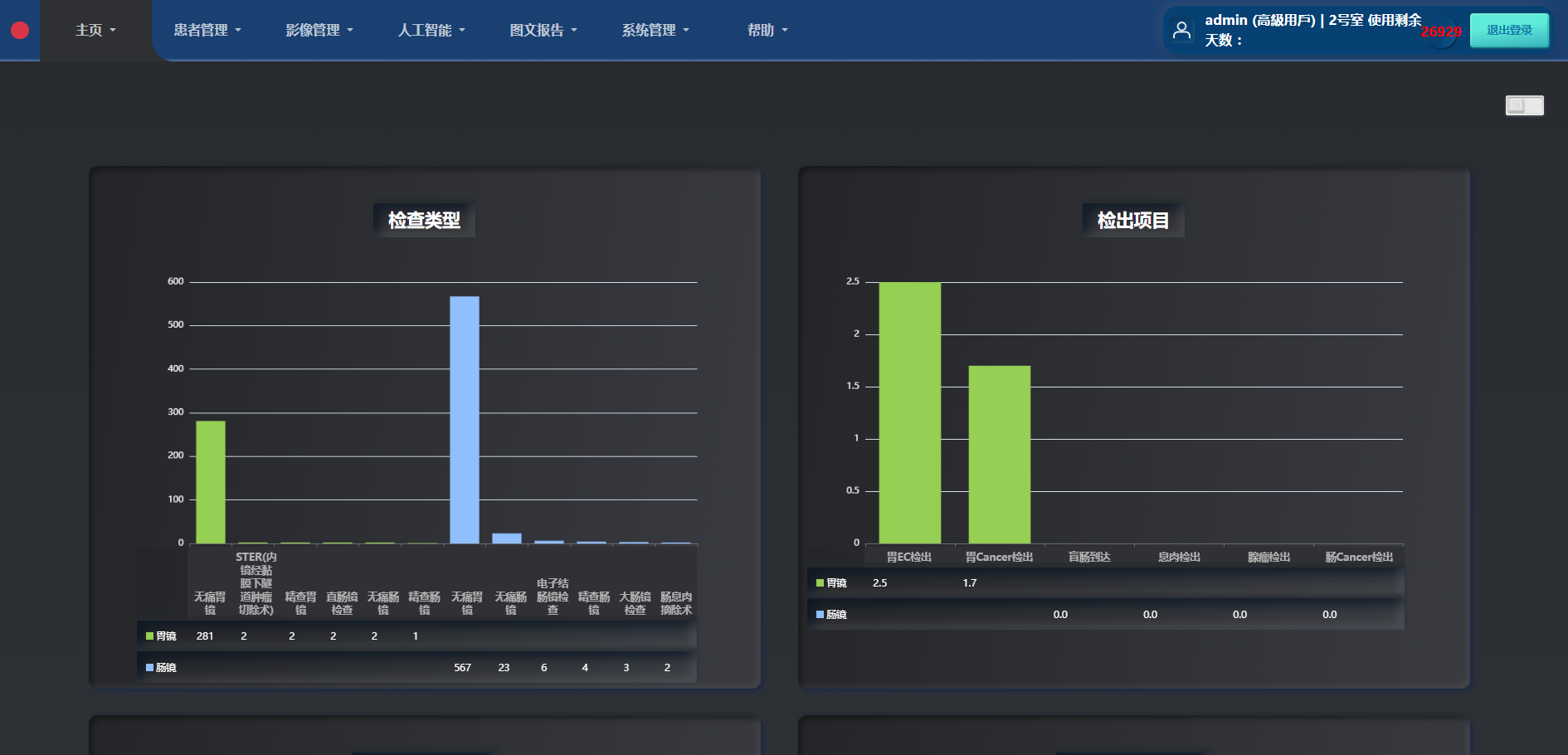
Indicators such as examination completeness, Boston Bowel Preparation scores and lesion detection are aggregated into charts automatically, supporting continuous department improvement.
Image-text information is traceable across the whole workflow, with examination, reporting and QC data managed in a closed loop to meet institutional quality and audit requirements.
Clinical track record
Use cases
From endoscopy centers to large-scale screening programs, yoyolink adapts to diverse clinical scenarios.
Improves examination efficiency and QC management while reducing documentation burden.
Specialist institutions focused on digestive diseases benefit from AI-assisted lesion detection.
Fast, standardized reporting for screening endoscopy in physical exam populations.
Standardized endoscopy and QC in premium health management settings.
Centralized annual GI endoscopy screening programs for enterprises and institutions.
Supports endoscopist training with AI annotation and QC data for education.
A practical tool for large-scale government-funded early GI cancer screening.
Routine early cancer screening in regions with high gastrointestinal tumor incidence.
Unified QC and reporting standards bring AI capability to primary care.
Journey
Algorithms and clinical requirements refined together with renowned Class-A tertiary hospitals using real endoscopic imaging.
Designated through the innovative medical device pathway with full-lifecycle management per medical device software standards.
1000+ real clinical cases across multiple centers validated detection accuracy and clinical usability.
The product holds an NMPA medical device registration certificate, qualified for hospital procurement and clinical use.
Multiple Shanghai hospitals have deployed the system in endoscopy centers and early cancer screening.
Clinical positioning statement
yoyolink displays suspected lesion regions in real time during endoscopy to provide assistive diagnostic reference for licensed endoscopists. Physicians make clinical decisions based on patient condition and actual imaging; the software is not a standalone basis for diagnosis.
Clinical Q&A
Common questions about clinical application, screening and the examination experience.
No. Real-time AI analysis does not add time to the procedure; automated screenshots, timing records and report drafts reduce the physician’s documentation work, making the overall flow smoother.
AI prompts are references for the physician, not a final diagnosis. The physician makes the judgment based on the actual imaging and the patient’s condition, and may arrange further examination if needed.
The report is drafted with AI assistance and issued after physician review and confirmation, usually significantly faster than before; the exact time follows the hospital’s workflow.
Where endoscopic experience is more limited, real-time AI prompts for suspected lesions and site-coverage tracking help raise the detection rate of early-stage cancer and other lesions, while automated reporting reduces documentation burden.
It automatically generates QC statistics and charts (volume, completeness, Boston scores, detection indicators) to support quality management, scheduling and continuous improvement.
Yes. The system supports standardized batch workflows and automated QC statistics, suitable for government early-cancer screening initiatives, enterprise centralized screening, medical consortia and paired-assistance programs.
Contact us to learn about clinical case studies and deployment plans.