AI-generated examination reports
During the examination the AI automatically selects 8–12 key images and generates a complete, objective, standards-compliant structured image-text report (200KB in ≤1 second) for physician review and issuance.


Product
Endoscopic image-assisted diagnosis system — hardware (AI image-acquisition workstation) and software in one, with gastroscopy AI and colonoscopy AI, covering patient management, AI-assisted examination, reporting, statistics and system administration.
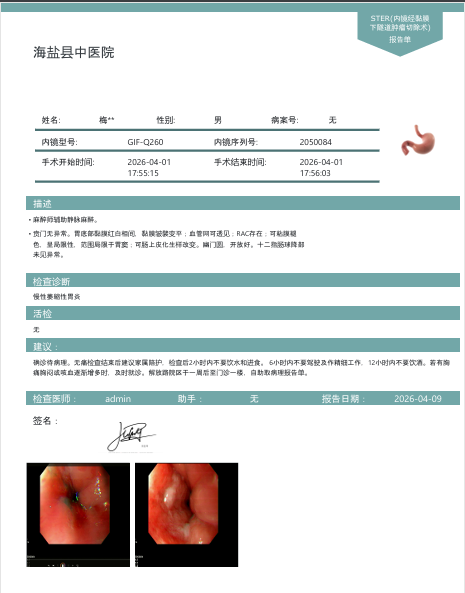
yoyolink AI GI Endoscopy System (endoscopic image-assisted diagnosis system) is an intelligent assistive diagnosis system designed for clinical gastroscopy and colonoscopy, integrating hardware (AI image-acquisition workstation) and software to deliver image acquisition, real-time analysis, lesion detection, diagnostic reporting and data management.
Hospital endoscopy centers, gastroenterology/anorectal specialty hospitals, professional physical examination centers, commercial health management centers, teaching hospitals and research institutions, and early GI cancer screening programs.
Modules
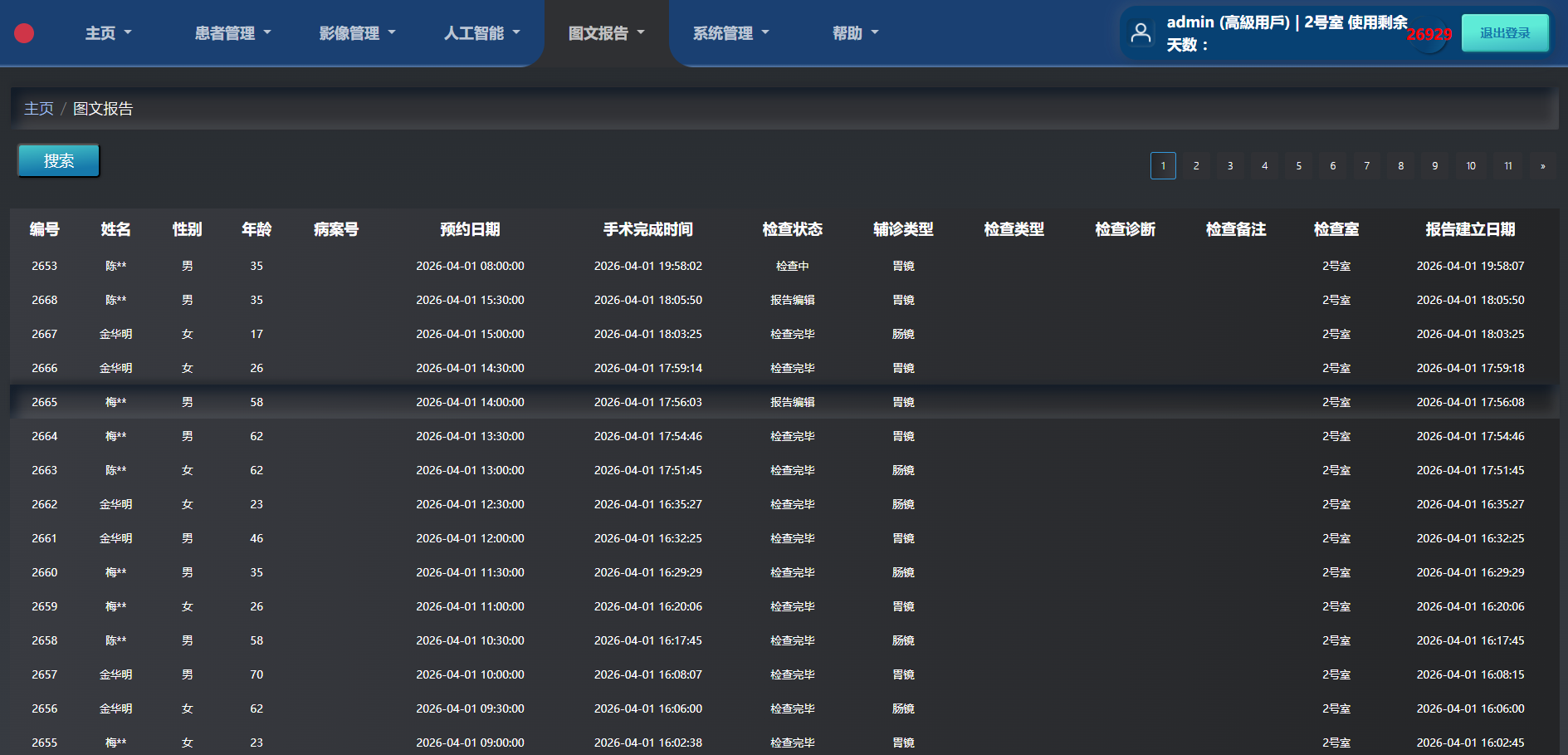
Full-lifecycle management of patient records, exam status and images, including batch upload of scheduled patients.
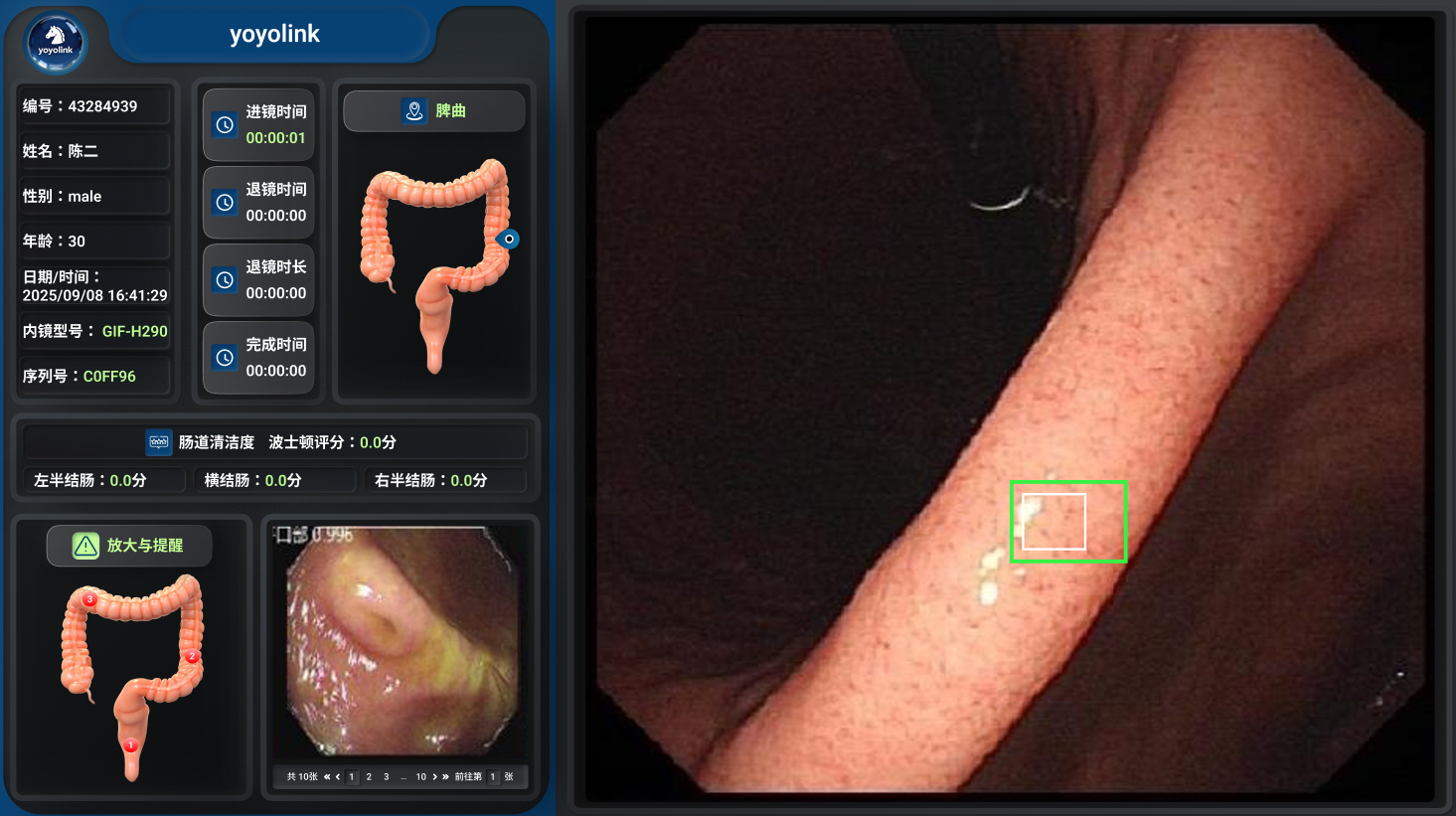
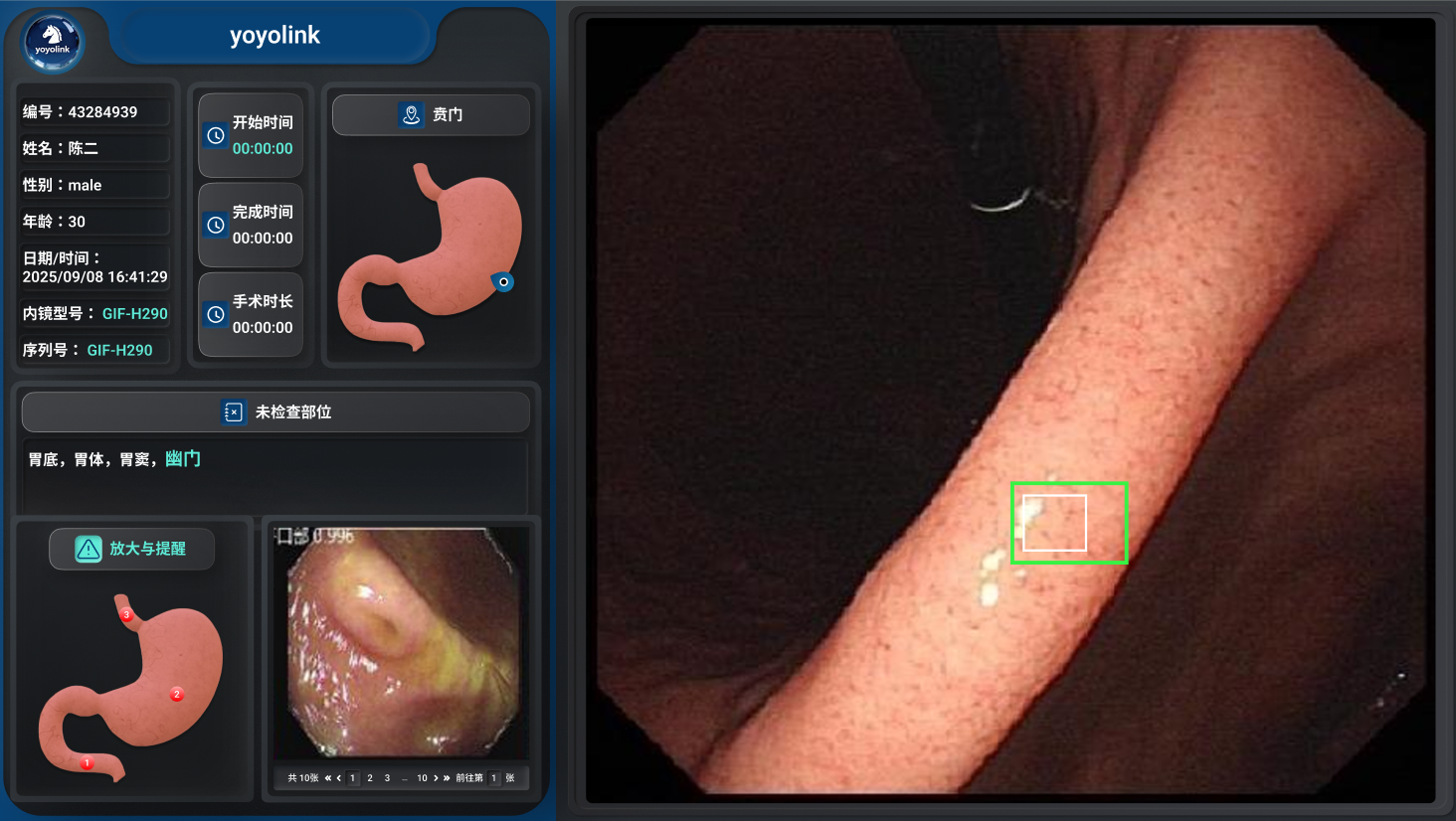
Automatic exam-type detection, procedure timing, anatomical site tracking, lesion detection with auto screenshots (98% polyp detection sensitivity), and quality scoring including Boston Bowel Preparation.
Configurable report templates, AI-assisted report generation (200KB image-text report in ≤1 second), physician editing, preview and printing.
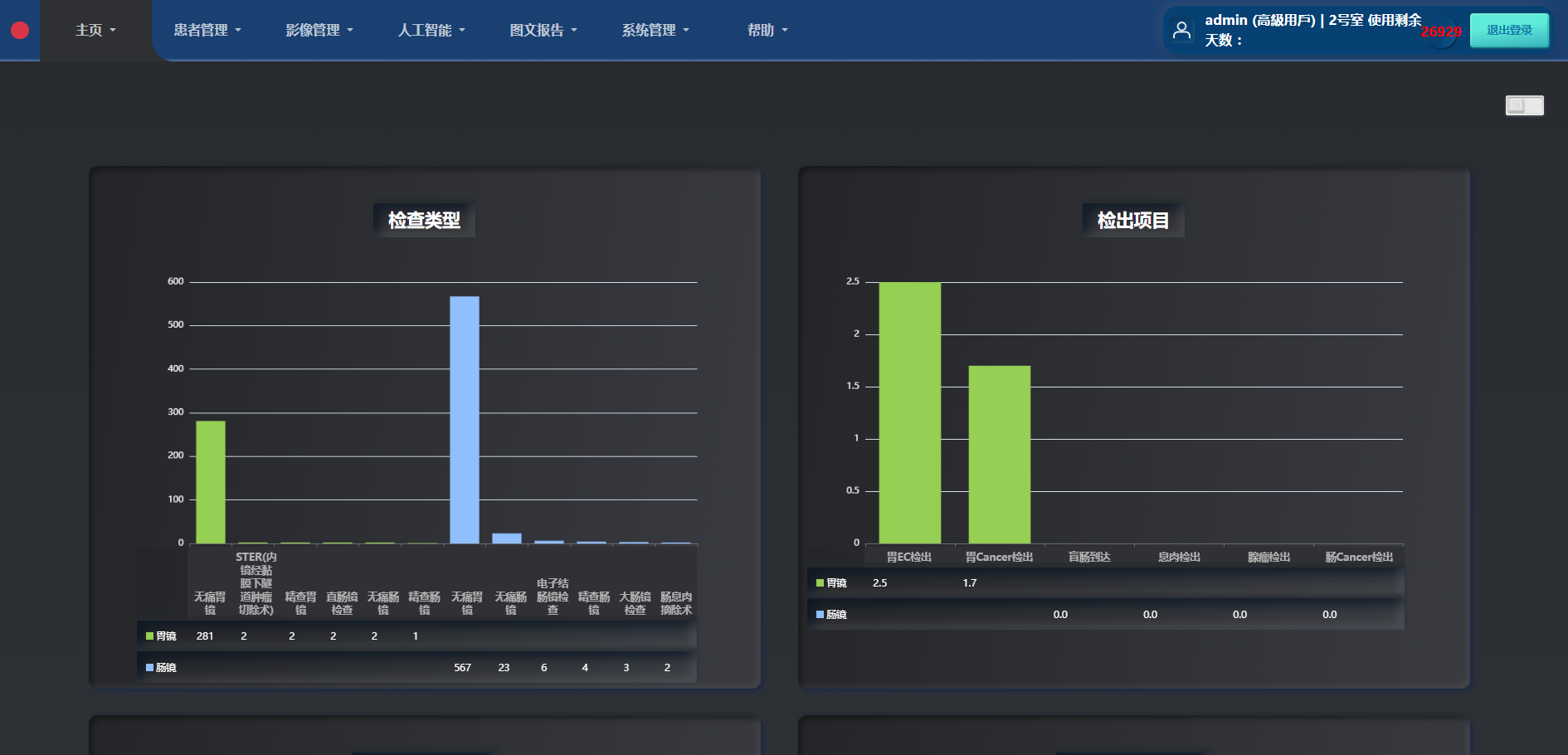
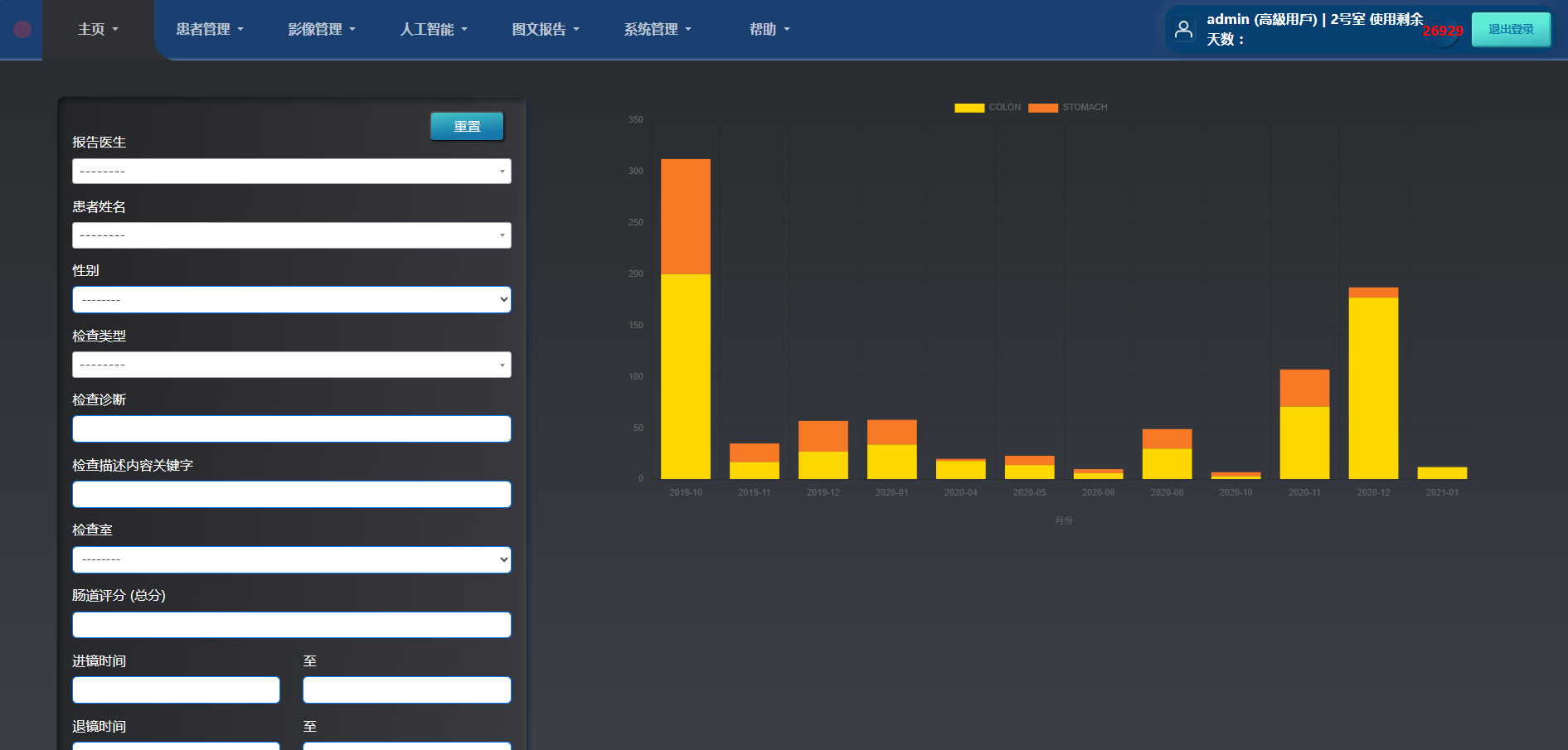
Fixed and custom charts aggregated by exam type, lesion type, bowel completeness, examination room and more, supporting management decisions.
RBAC role permissions, audit logs, encrypted USB dual authentication and AES data encryption meeting medical information security requirements.
Complete system
yoyolink is not a single detection demo — it is a complete endoscopy center information system covering examination, reporting, management and quality control.
During the examination the AI automatically selects 8–12 key images and generates a complete, objective, standards-compliant structured image-text report (200KB in ≤1 second) for physician review and issuance.
Configurable report templates, online editing and preview, one-click printing; image-text reports archive to hospital storage servers via HIS/PACS with full traceability.
A department-level console manages patients, examination records and report review workflows, with RBAC role permissions and audit logging to meet hospital information security requirements.
QC indicators such as completeness, Boston Bowel Preparation scores, withdrawal time and lesion detection are captured automatically and charted by exam type, room and time period to support departmental quality management.
Recognition
Built on self-developed deep learning models, yoyolink recognizes a broad range of GI findings and diseases (partial list) and covers 80+ anatomical sites and lesion features, with 98% polyp detection sensitivity.
Assists recognition of early gastric and colorectal cancer findings for earlier diagnosis and treatment.
98% polyp detection sensitivity with real-time prompts and automatic screenshots.
Recognition and annotation of peptic and other ulcerative lesions.
Identification and prompting of suspicious tumorous lesions.
Typical Crohn’s disease lesion features to support inflammatory bowel disease assessment.
Ulcerative colitis lesion recognition supporting QC and follow-up statistics.
yoyolink uses a hardware + software retrofit design — the system comes with its own AI image-acquisition workstation and connects directly to the endoscope host or monitor output (SDI, DVI, HDMI, YPBPR, etc.), so AI can be added to endoscopes of different brands and models without purchasing or replacing existing equipment.
| Dimension | yoyolink retrofit approach | Some integrated/bundled systems |
|---|---|---|
| Installation | In-house AI image-acquisition workstation connects directly to existing endoscope host/monitor, ready to use | May require replacing or bundling whole systems |
| Device compatibility | Not limited to any brand or model; works with mainstream endoscopes | May be limited to specific brands or models |
| Cost | Keeps existing equipment; lower investment | New procurement required; higher cost |
| Deployment time | Quick go-live in an endoscopy center | Longer, depending on replacement scope |
| Feature completeness | Hardware + software: AI examination + reporting + console + QC in one system | Some solutions offer detection only |
| Data security | HIS/PACS integration with hospital-local storage | Varies by solution |
Choose yoyolink to bring AI to the endoscopy equipment you already have.
Screens
Demo data notice
Patient names, record numbers, ages and other personal information shown in the interface screenshots on this page are demo data, fully anonymized (pseudonymized) and used for product display only — they do not relate to any real patients.
Technology
Trained on hundreds of thousands of real clinical endoscopic images, covering 80+ digestive tract sites and lesion features for both gastroscopy and colonoscopy — not tied to any specific endoscope brand or model.
The system comes with an AI image-acquisition workstation featuring H.264/H.265 hardware encoding and lossless 1080p@60fps capture for clear, complete imaging.
Supports simultaneous AI-assisted examinations in 4 operating rooms with real-time data sync.
200KB image-text endoscopy reports generated in ≤1 second.
Not limited to specific endoscope brands or models — compatible with mainstream endoscopy devices (TCP/IP, USB) and JPG, PNG and DCM image formats. Connects directly to the endoscope host or monitor output (SDI, DVI, HDMI, YPBPR) for retrofit deployment without replacing existing equipment.
Reserved hospital HIS/LIS interfaces; reports upload to hospital storage servers.
Docker-based deployment, modular upgrades and one-click rollback on Windows 10+ and major browsers.
Encrypted storage and transmission protecting patient information and imaging data throughout their lifecycle.
System startup requires an authorized encrypted USB key for physical-layer access control.
Login, operation and data changes are logged end-to-end for audit and traceability.
The system uses a B/S (browser/server) architecture with layered design: presentation, business, data access, data storage and AI service layers. The frontend is built with Vue 3 and ECharts; the backend uses Spring Boot / Django with PostgreSQL; images and large files use object storage; and the AI service layer provides recognition capabilities through standardized interfaces. RESTful APIs with reserved HIS/LIS integration support modular extension for each institution.
Hospital team Q&A
Common questions from physicians, nurses, IT and managers.
The system is co-developed with renowned Class-A tertiary hospitals in China and holds an NMPA medical device registration certificate, with 1000+ real cases in multicenter clinical validation. The AI highlights suspected lesions in real time and tracks completeness and quality scores to help physicians confirm coverage. Final interpretation and confirmation always rest with the physician.
Yes. The AI drafts the report (auto-selecting 8–12 images with objective endoscopic descriptions); physicians can edit lesion descriptions, conclusions and recommendations on the template, then review and confirm before issuance. Report states and changes are fully logged and traceable.
No. The interface follows clinical workflows and supports batch upload of scheduled patients, multi-condition search and keyboard shortcuts. The AI captures screenshots and records procedure times automatically, so nurses do not need to assemble images or paperwork manually.
Up to 4 operating rooms can run AI-assisted examinations simultaneously, with real-time data sync and no mutual interference.
The system includes an AI image-acquisition workstation with a medical capture card and a dedicated GPU host (SDI/DVI/HDMI/YPBPR inputs), running Windows 10+ with Docker. Clients are standard Windows PCs with Chrome/Edge. Deployment supports containerization, modular upgrades and one-click rollback.
AES data encryption, encrypted USB dual authentication, role-based access control and audit logging; image-text reports can upload to hospital on-premise storage servers, forming a closed loop with HIS/PACS.
The product holds an NMPA medical device registration certificate and is qualified for clinical market access and hospital procurement. Contact us for certification and clinical validation materials.
No. The AI automatically detects whether the current examination is gastroscopy or colonoscopy and switches modes accordingly.
Contact us for product materials, interface demos and deployment plans.